| START |
|
|
![]() |
| - Multi Info - |
|
|
![]() |
| - - - - - - - NEW |
|
The Weekly Fragment
|
|
A weekly fragment on documented UFO cases and extraterrestrial intelligence in Europe - one case, one document, one development at a time.
• Read this week's fragment
|
|
![]() |
| OLD QUOTE |
“To consider the Earth as the only populated world in infinite space is as absurd as to assert that in an entire field of millet, only one grain will grow.”
― Metrodorus of Chios 4th century B.C. |
![]() |
| Website News 2014-2021. We are back again |
|
|
![]() |
|
The extraterrestrials known as ‘gods’ created life on Earth - There is some troubling evidence -
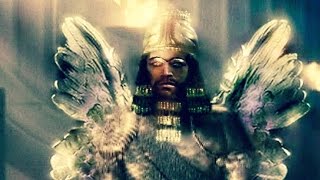 Ancient writings and traditions worldwide tell us that intelligent and powerful beings came to Earth in vehicles from the sky. The words used to describe those events were what any pre-technological culture would use to describe contact with technologically advanced beings. Ancient writings and traditions worldwide tell us that intelligent and powerful beings came to Earth in vehicles from the sky. The words used to describe those events were what any pre-technological culture would use to describe contact with technologically advanced beings.
Now that we have entered the age of science ourselves, we can understand how life can be scientifically (rather than mystically) created by a highly advanced race.
Those searching for evidence of extraterrestrial life need look no further than in humanity’s most revered ancient text. The “Elohim,” as they were known in the original Hebrew Bible or as Anunnaki, in other religious texts, deliberately created all life on Earth through highly advanced science.
Thousands of years ago, scientists from another planet came to Earth and created all forms of life—including humans, “in their image and likeness.” Due to their highly advanced technology, they were mistaken for gods by our primitive ancestors and often referred to as “Elohim”, which in ancient Hebrew and in the texts of the ancient Sumerians, which are older than the Bible, and in the texts of the ancient Zoroastrians, which are considered to be the oldest, means" “Those who came from the sky.” Despite being a plural word, over time the word “Elohim” was mistranslated into the singular “God” as referenced in modern-day Bibles. #Archufology #Archovnilogia #Archofulogie
Below you will find a selection of resources we consider valuable for deepening the topics covered on this site. These links were carefully chosen and represent diverse perspectives within the fields of historical, textual, and ufological research.
Primary Texts and Translations
-
Sacred-Texts.com
Massive collection of sacred texts, mythology, and folklore from all cultures. Includes Zoroastrian, Sumerian, Vedic, and Gnostic texts.
-
ETCSL — Oxford University
Electronic Text Corpus of Sumerian Literature. Verified academic transcriptions of cuneiform tablets. Reference source for Sumerian studies.
-
Gāthās of Zarathuštra
Gāthās texts with multiple English translations. Useful tool for studying the compositions of Zarathustra.
-
Encyclopædia Iranica
Authoritative academic reference on Iranian culture, history, and religion. Articles on Zoroastrianism, the Avesta, and Persian civilization.
-
Perseus Digital Library (Tufts)
Digital library of Greek and Latin texts. Useful for classical sources mentioning Zarathustra (Diogenes Laertius, Plutarch, Hermodorus).
Alternative Archaeology & Ancient Civilizations
-
Ancient Origins
Articles on archaeology, ancient artifacts, and lost civilizations. Illustrated content updated regularly.
-
Biblioteca Pleyades
Spanish-language blog on alternative history, non-conventional archaeology, ufology, and diverse topics. Popular in Spanish-speaking communities.
-
Göbekli Tepe — General Information
Information on the archaeological site that challenges conventional chronologies. Relevant to the debate on the true age of ancient monuments.
Ufology & Contact Research
-
National UFO Reporting Center (NUFORC)
Public database of verified sighting reports, archived since 1974. Over 400,000 documented reports.
-
The Black Vault
Declassified government documents on UFOs and unidentified aerial phenomena. Curated by John Greenewald.
-
Earthfiles
Linda Moulton Howe. Field reports, interviews, and analysis on sightings and non-conventional disclosure topics.
Zoroastrianism & Indo-Iranian Studies
-
Zoroastrian.org
Information on the Zoroastrian faith, liturgy, history, and sacred texts. Traditional and academic approach.
-
Ayat.org
Zoroastrian resources, text translations, and articles on the history of Mazdayasna.
-
Hellenica
Articles on the connection between Zoroastrianism and other traditions. Some authors address non-conventional perspectives.
Gnosticism & Early Biblical Texts
-
gnosis.org
Complete Gnostic texts (Nag Hammadi Library), apocryphal gospels, and early Christian materials. Relevant to the study of "Elohim" and "Benei Ha'Elohim".
-
Early Christian Writings
Early Christian writings and apocrypha. Historical context for interpreting biblical texts on "gods" and "sons of gods".
Note: We link these resources exclusively for educational purposes and to expand reading. The inclusion of an external site does not constitute full endorsement of all its content. We recommend cross-referencing information with multiple sources and exercising critical judgment when reading external material.
Week of 26 October-1 November 2026 — GEIPAN, France: the archive the whole world can read
Since 1977, under the French space agency CNES, a small unit has quietly done what most countries never dared: collect, investigate and classify civilian and military UFO reports with a public methodology. Since 2007, its case files are published online, classified in four categories - from U1 (fully explained) to U4 (unexplained). Anyone can browse decades of cases and read the investigators' assessments.
|
Week of 19-25 October 2026 — The UMMO letters, 1965+: the longest correspondence in the field
Starting in the mid-sixties, postal envelopes began arriving in Spain and France - typed documents stamped with the symbol UMMO, claiming representation from visitors of Wolf 424. Hundreds of detailed essays on physics, biology and sociology, arriving by mail for decades. For sceptics, an elaborate hoax; for believers, genuine contact. This site files them under the three-plane method: what is documented is the letters themselves; what they mean remains open.
|
Week of 12-18 October 2026 — Swissair Flight 127, Switzerland 1957: the airliner the objects followed
On 14 June 1957, a Swissair DC-4 flying from Geneva to Basel was shadowed at close range by unidentified objects over Swiss territory near the Rhine - the crew reported the objects passing close to the aircraft, and radar tracking reportedly confirmed contact. Swiss aviation authorities opened an enquiry. Two decades before Manises diverted a Spanish Airbus, Europe already had its precedent.
|
Week of 5-11 October 2026 — Valensole, France 1965: the farmer and the imprint
In Provence's lavender country, farmer Maurice Masse reported seeing an oval object landed in his field beside two small humanoid figures. The spot showed a hexagonal impression where the soil had hardened and plants had wilted. Local gendarmerie interviewed him and registered physical traces; the file later served as a GEPAN reference. Decades later, Masse never changed his account.
|
Week of 28 September- 4 October 2026 — Florence, Italy 1954: the day a football match stopped mid-air
During a match at the Artemio Franchi stadium in Florence, thousands of spectators looked up at once: several objects described as eggs or spheres crossed the sky above the stadium. Play halted. White sticky strands fell over Florence later that day - "angel hair" analysed at the University of Florence without identifying its origin. Mass sighting, physical residue and laboratory analysis in miniature.
|
 Week of 21-27 September 2026 — Ghost Rockets, Sweden 1946: the wave that came before saucers Week of 21-27 September 2026 — Ghost Rockets, Sweden 1946: the wave that came before saucers
A full year before Kenneth Arnold's famous sighting gave the world "flying saucer", Scandinavia was under a wave. Over a thousand reports described cylindrical, rocket-like objects crossing the skies of Sweden, Finland and Norway - many seen in daylight by trained observers. Fragments were allegedly found; the Swedish Defence Staff investigated officially and concluded the objects were real, but unexplained.
Views:
15
|
Added by:
Admin
|
Date:
2026-09-21
|
|
 Week of 14-20 September 2026 — Hessdalen, Norway: the case science monitors live Week of 14-20 September 2026 — Hessdalen, Norway: the case science monitors live
Since 1984, a valley in central Norway produces recurring lights: brilliant white, yellow and red spheres that appear over the terrain, move silently and disappear. The only place on Earth with permanent instruments observing unidentified luminous phenomena for decades.
|

It has always been striking that, in the debate about ancient contacts, almost all the attention focuses on Mesopotamia and Egypt. The Anunnaki, the tablets, the cylinder seals... But there is another corner of Europe where tradition preserves equally strange accounts: the Celtic lands. Ireland, Wales, Brittany. And there things take on a peculiar tone, because the stories speak not only of descending gods, but of something closer to what we today call anomalous phenomena.
Views:
20
|
Added by:
Admin
|
Date:
2026-09-03
|
- - CREATION OF UFO NATION - -
 For those who: For those who:
- Know that life on Earth has an extraterrestrial origin.
- Recognize the existence of the Anunnaki, Nibiru, and interdimensional minds.
- Believe that institutional religions have distorted the truth.
- Defend free access to information and sovereignty of thought.
- Are tired of being ridiculed for speaking about what they have seen, felt, or known.
- Do not need followers or likes, only real connection.
- Understand that immortality and contact are rights, not madness.
- Want a space where cosmic consciousness is respected and protected.
UFO Nation is not a country. It is a community of awakened ones.
If you recognize yourself in this, you are already part of it.
Views:
28
|
Added by:
Admin
|
Date:
2026-08-20
|
| About This Archive — Context |
|
About the Name "Elohim"
Although this website carries the name "Elohim", it does not focus exclusively on them. The term Elohim appears throughout the Judeo-Christian Bible, but depending on the context, its meaning and usage change radically. In some passages it refers to a singular God, in others to multiple divine beings, in still others to judges or rulers. The linguistic ambiguity reflects a deeper complexity in how ancient cultures understood non-human entities.
Beyond Religious Terminology
This archive treats the term Elohim not as a theological doctrine, but as one designation among many that humanity has used across millennia to describe beings perceived as beyond ordinary human nature. Whether these beings were divine, extraterrestrial, interdimensional, or psychological constructs remains open to interpretation. What matters for this method is documentation of the testimony itself — not endorsement of any single framework.
|
Views:
15
|
Added by:
Admin
|
Date:
2026-08-17
|
| |
|
| Log In |
|
![]() |
| LIFE "X" |



#/es/archovnilogia
#/en/archufology
#/de/archofulogie/ |
![]() |
| -NEWS - |
|
|
![]() |
|
